The New Face of E-Commerce: India’s Digital Revolution Has Only Just Begun
By the time you finish reading this, thousands of online orders will have already been placed across the globe — some by voice command, others via virtual try-ons, and a few through emojis on WhatsApp. The next 500 million users won’t shop the same way the first 500 million did.
Published
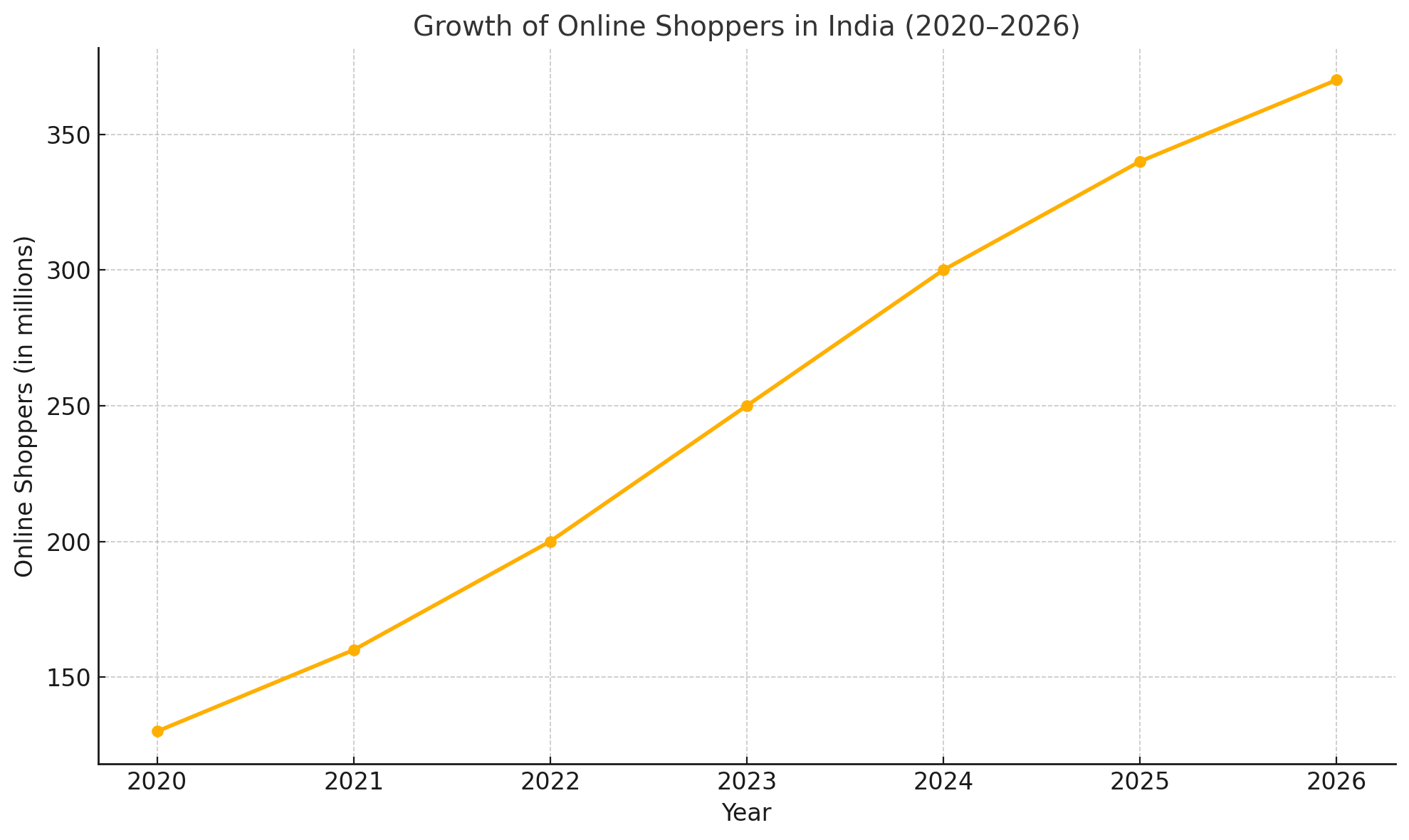
The explosive growth of online shoppers in India.
What if we told you that e-commerce in India isn’t just about convenience anymore?
It’s a cultural shift. A tech evolution. A quiet revolution reshaping how a billion people live, shop, and connect.
With over 918 million internet users — nearly two-thirds of India’s population — the country's digital marketplace is exploding. And it’s no longer limited to metros or millennials. Tier-II and Tier-III towns are becoming the engine of growth, ushering in a new kind of consumer: young, aspirational, price-conscious, and mobile-first.
In just three years, over 100 million new shoppers came online. One in three is Gen Z. Many come from lower-income households. That means the future of e-commerce isn’t just premium—it’s inclusive.
Why E-Commerce Really Took Off
E-commerce didn’t replace shops because people were lazy. It emerged because people wanted freedom:
Freedom from distance, time zones, and long lines.
Freedom to choose, compare, and customize.
Freedom to access global markets from remote towns.
Back in the '90s, companies like Amazon and eBay didn’t just launch websites. They launched a new mindset. Today, personalization, predictive intelligence, and frictionless UX are table stakes. Dezyne École College
But India’s story is unique. Here, e-commerce is breaking language barriers, empowering women, and creating micro-entrepreneurs. Platforms like Meesho have turned WhatsApp groups into digital storefronts. Nykaa used influencer marketing to make beauty aspirational and accessible. And Amazon? It’s not just a marketplace; it’s a supply chain powerhouse. Dezyne École College
From Scroll to Sale: How Tech Powers the Shift
E-commerce today is smarter, faster, and often invisible. It comes to you. Here’s how:
Voice Commerce: Users say "Hey Alexa, order detergent" and it’s done.
Visual Search: Snap a pic, and AI finds the product for you.
AR Shopping: Try on sunglasses or sofas before you buy.
Social Commerce: Instagram posts now come with a 'Buy Now' button.
Subscription Models: Coffee, snacks, razors—delivered monthly, no clicks needed.
Sustainable Commerce: Buyers now demand eco-conscious packaging and ethical sourcing.
Add to this the rise of vernacular interfaces, UPI-driven micro-payments, and lightning-fast delivery models, and you get a market unlike any other in the world.
Business Models That Are Changing the Game
India isn’t just replicating the West. It’s innovating its own playbook. Let’s break it down:
B2C: Direct sales to consumers (Amazon, Flipkart).
D2C: Brands selling without middlemen (boAt, MamaEarth).
B2B: Businesses selling in bulk (IndiaMART, Udaan).
B2G: Selling to the government (GeM).
Each of these isn’t just a model; it’s an ecosystem.
The Real Secret: E-Commerce is Emotional
The smartest platforms aren’t just tech-savvy—they’re emotionally intelligent. They blend data with dopamine:
AI knows what you want before you do.
Retargeting ads revive abandoned carts.
Loyalty programs turn users into fans.
Chatbots talk like humans.
This isn’t manipulation. It’s personalization at scale.
What Comes Next?
The next decade of e-commerce will be:
Predictive: AI anticipates needs.
Conversational: Voice replaces typing.
Circular: Resale and reuse gain traction.
Planet-conscious: Green becomes the default.
As consumers demand more, businesses must evolve faster. That’s where education comes in. Dezyne École College
The BBA Edge: Building the Future of Digital Business
E-commerce is no longer just a tech field. It’s a business revolution. And that’s why a Bachelor of Business Administration (BBA) is more relevant than ever.
From digital marketing to UX, logistics to analytics, a BBA today equips students with the strategic and technical skills to lead in a world where commerce is hybrid, real-time, and borderless.
At Dezyne École College, we don’t just teach theory. We immerse students in live projects, mentor-led innovation, and hands-on experiences that prepare them for the fast lane of digital transformation.
Final Thought
E-commerce in India is not done growing. It’s just changing shape.
From AI to AR, from Tier-I to Bharat, from cart to conversation—the future is unfolding fast.
The only question is: will you be ready for it?
Related articles
Explore more ideas, careers, and design insights from Dezyne École.