GUARANTEED TO BLEED: The Madras Check Story By Dr. Vinita Mathur — Founder President & Principal, Dezyne École College (est. 2008), Ajmer
Madras Check — Quick Facts
- What is it? A lightweight, yarn-dyed cotton plaid fabric originating in Chennai (formerly Madras), India, dating back over 800 years.
- Why is it famous? Its vegetable dyes "bleed" with every wash, creating a unique vintage patina — marketed in America as "Guaranteed to Bleed."
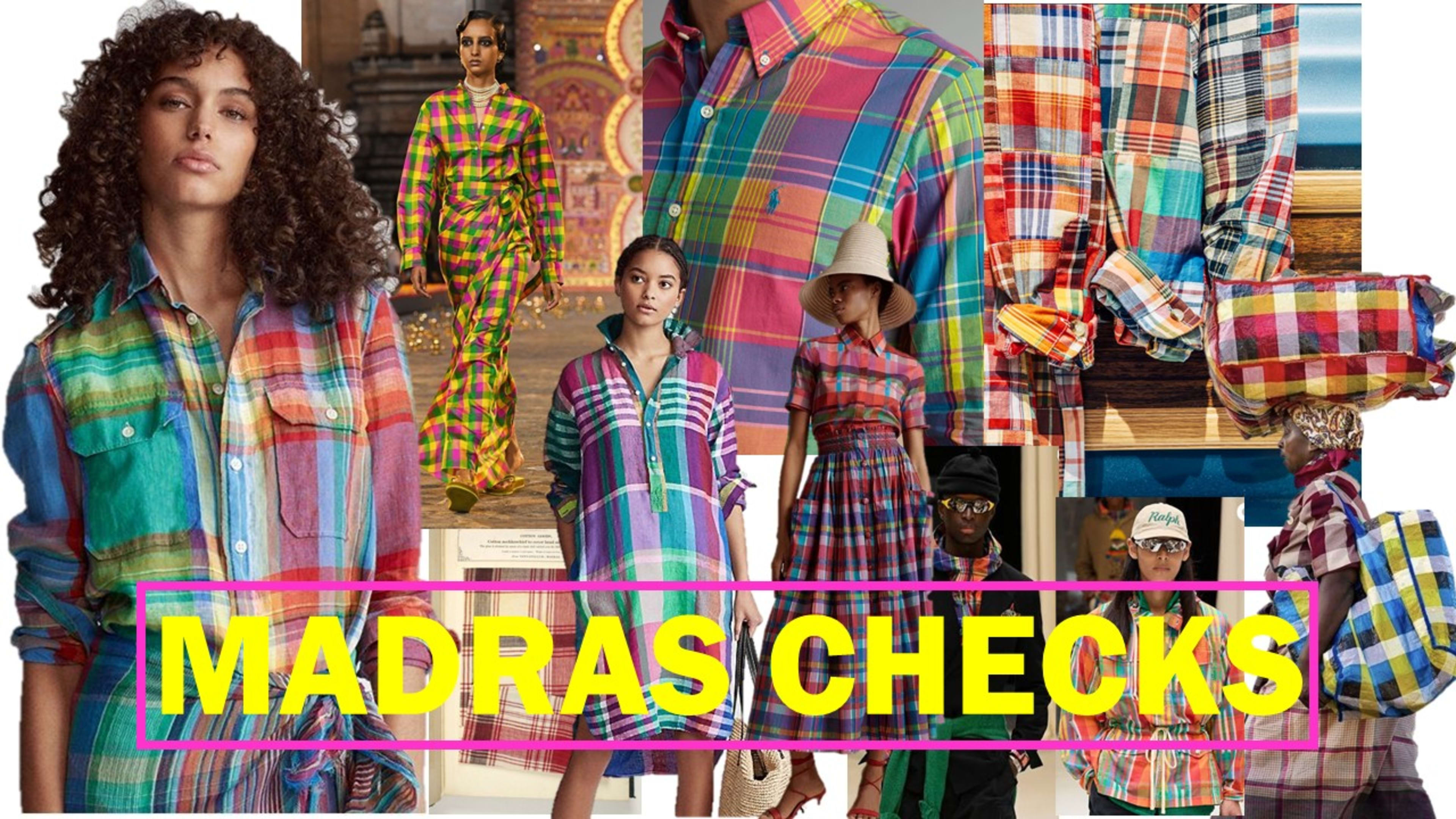
- Who popularized it? Brooks Brothers, Ralph Lauren, J.Crew, and Vineyard Vines, after David Ogilvy's legendary 1958–61 campaigns.
- Where is it made? Handwoven in and around Chennai, Tamil Nadu, South India.
The Madras check is older than most nations. Its roots stretch back over 800 years, long before the word "fashion" existed.
The Loom Before the Empire
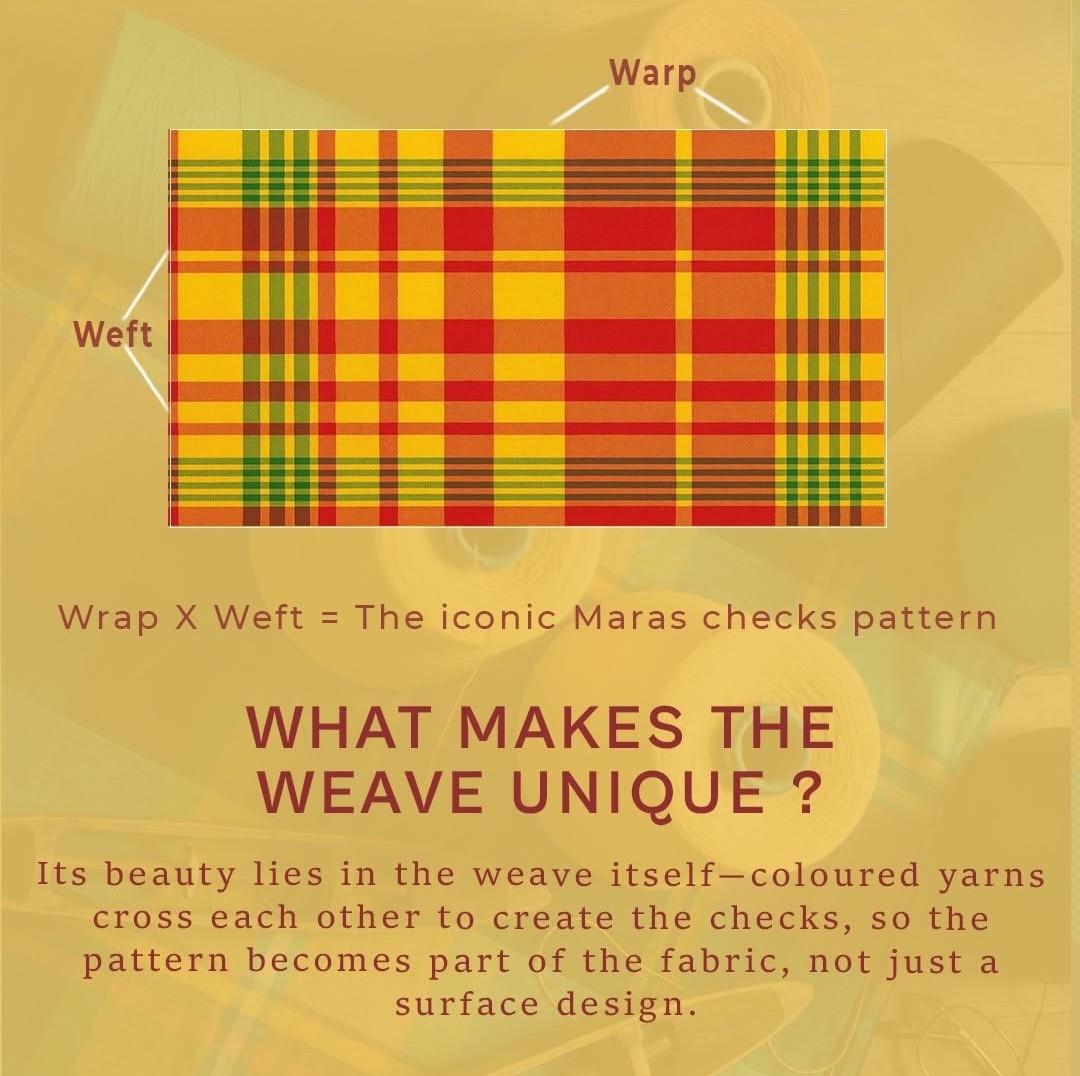
To understand Madras, you must first understand a problem. The Coromandel Coast is one of the most punishing climates on Earth. For the fishermen and paddy farmers of Tamil Nadu, clothing was never about aesthetics — it was climate engineering. Centuries before the word "fashion" existed, South Indian artisans perfected the solution: Fine muslin woven from lightweight 60-count yarn — airy enough to breathe, sturdy enough to survive daily labor. Cut into 36-inch squares and tied at the waist, it became the lungi. Yarn dyed, never printed. Indigo from the Indigofera plant. Reds from laterite soil. Turmeric gold. Mordants fixed with sesame oil, which gave the cloth its famously distinctive, earthy scent. Geometry born from the loom itself — the mathematics of interlacing colored warps and wefts.
To the Indian weaver, slight irregularity was not an error. It was the signature of the human hand. Hold that thought. Originally, these checked squares were simply tied around the waist and worn as lungis by fishermen and field workers. Functional. Washable. Affordable. There is a poetic symmetry here that textile historians rarely miss: madras was born not in a design studio, but as a solution to a problem — how to stay cool in tropical heat.
What makes Madras check fabric unique?
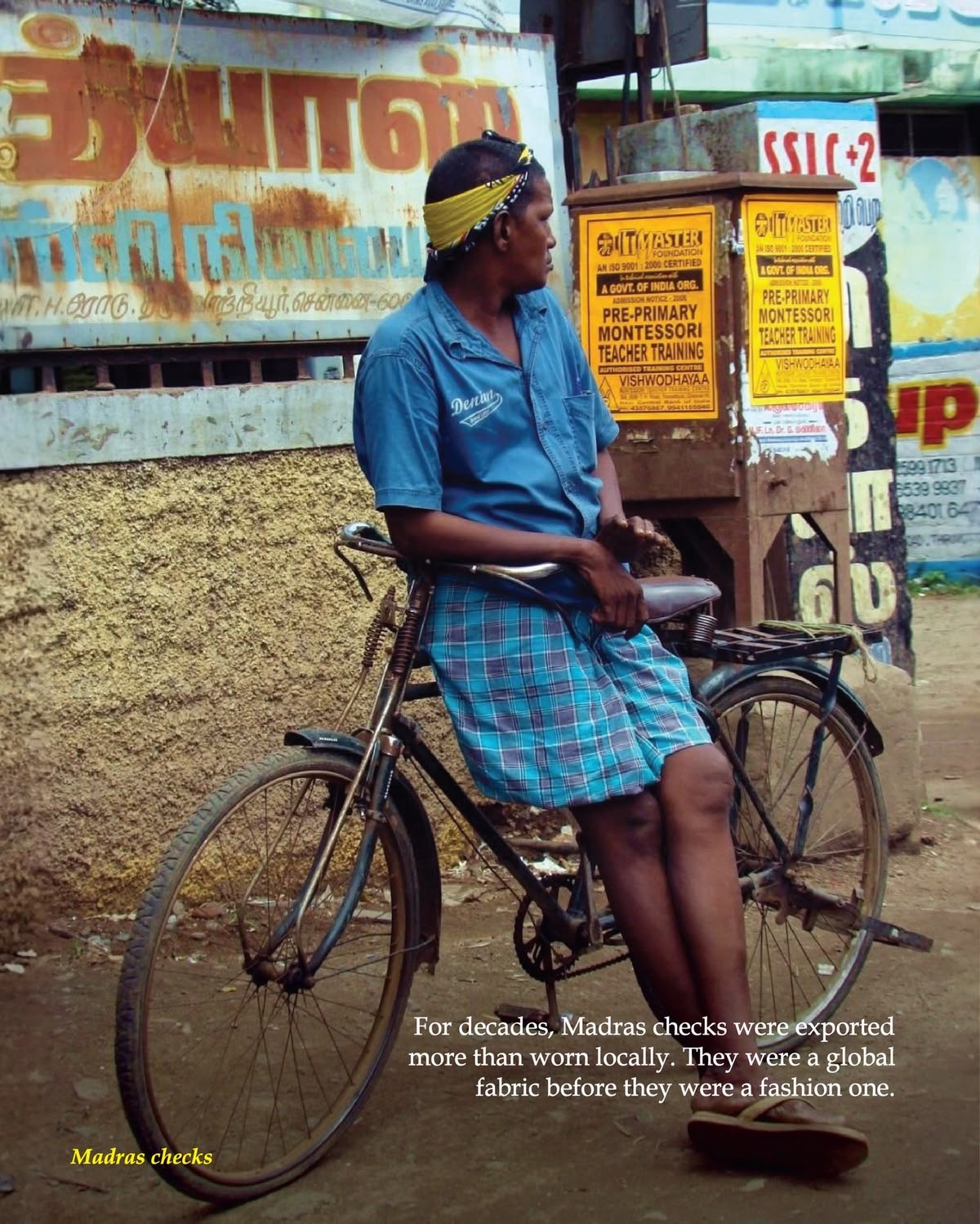
What made Madras unlike anything Europe or America had ever woven?
1. Yarn-Dyed, Not Piece-Dyed.
Unlike printed checks, authentic Madras is woven from pre-dyed yarns — up to 4–5 colors on the warp and as many as 10 on the weft in the handloom era. When warp and weft intersect, colors optically blend, creating those signature soft, luminous intersections that no printing process can replicate.
2. The "Bleed" — The Flaw That Became the Feature.
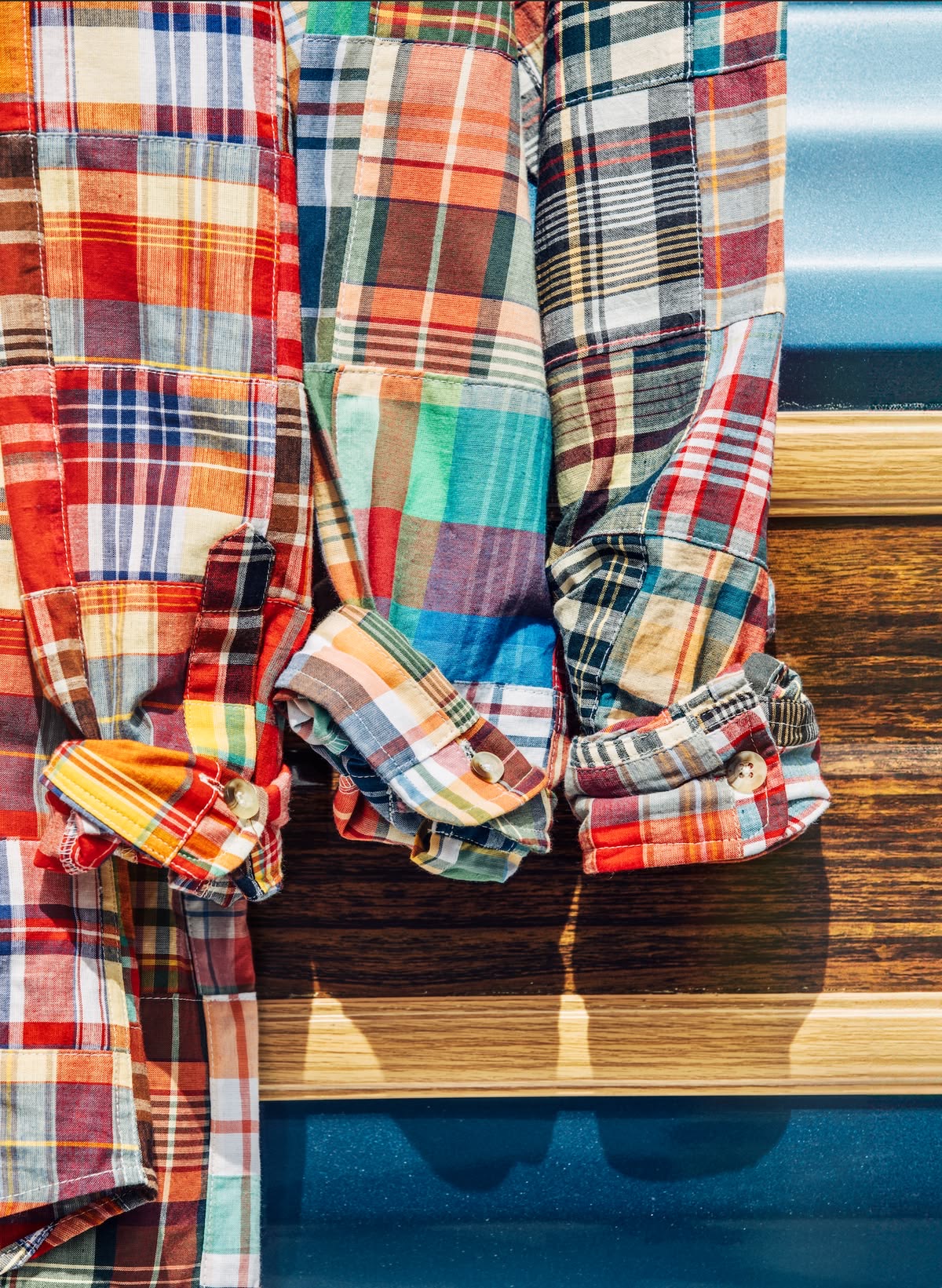
The vegetable dyes were never fully colorfast. Every wash made the colors migrate and mingle, producing a softened, sun-washed patina — a new check with every laundry cycle.
Where industrial textile logic saw a defect, the discerning eye saw living fabric — each garment aging uniquely, like weathered beach cottages or sun-bleached umbrellas on the New England shore.
3. Breathable, Lightweight Cotton.
Woven with fine 60-count warp yarn, it was featherlight and supremely breathable — functionally perfect, and later, aesthetically perfect for summer.
4. Imperfection as Authenticity.
Slightly uneven hand-applied dyes read, to Western eyes, as artisanal craftsmanship and relaxed elegance. Long before "wabi-sabi," "slow fashion," and "artisanal irregularity" became marketing vocabulary — Madras had already embodied them all.
When Was It Popular? Three Great Waves
Wave One — The Colonial Era (17th–18th Century):
Through the East India Company's Fort St. George (established 1630s), Madras cloth entered global trade. It sailed aboard ships to West Africa — London School of Economics research estimates Indian cotton textiles accounted for 30% of 18th-century Anglo-African trade value — and crossed the Atlantic to the Caribbean, where brightly colored madras headdresses became instruments of quiet resistance, subverting sumptuary laws imposed on enslaved and free Black women. Wave Two — The Preppy Explosion (1950s–1970s):
This was Madras's American superstardom.
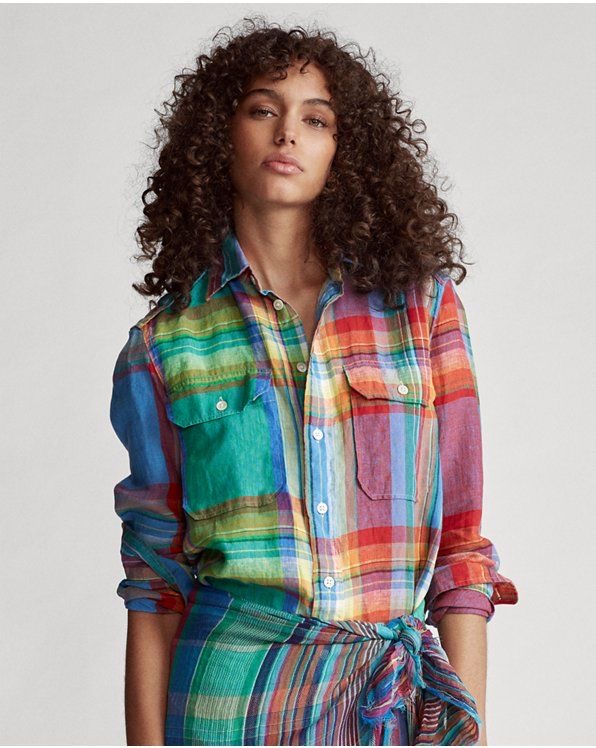
And it almost ended in a lawsuit. In 1958, importer William Jacobson discovered the bleeding fabric and excitedly sold it to Brooks Brothers — forgetting to mention it bled. Complaints and lawsuits rolled in as customers' shirts ran into everything in the wash. Enter David Ogilvy, one of advertising's original "Mad Men," who spun disaster into genius:"Guaranteed to Bleed. "The flaw became the selling point.
An eight-page advertorial in Seventeen magazine hailed the "miracle handwoven fabric from India." From the brink of PR catastrophe, Madras became a must-have. Wave Three — The Enduring Icon (1970s–2000s & beyond):
Ramp walks, fashion editorials, influencer wardrobes. Through the late 20th century and into the 2000s, Madras cycled through revivals — vintage bleeding Madras adored in the 70s–80s, preppy revivals in the 90s, and today, a quieter, refined iteration riding the "quiet luxury" wave.
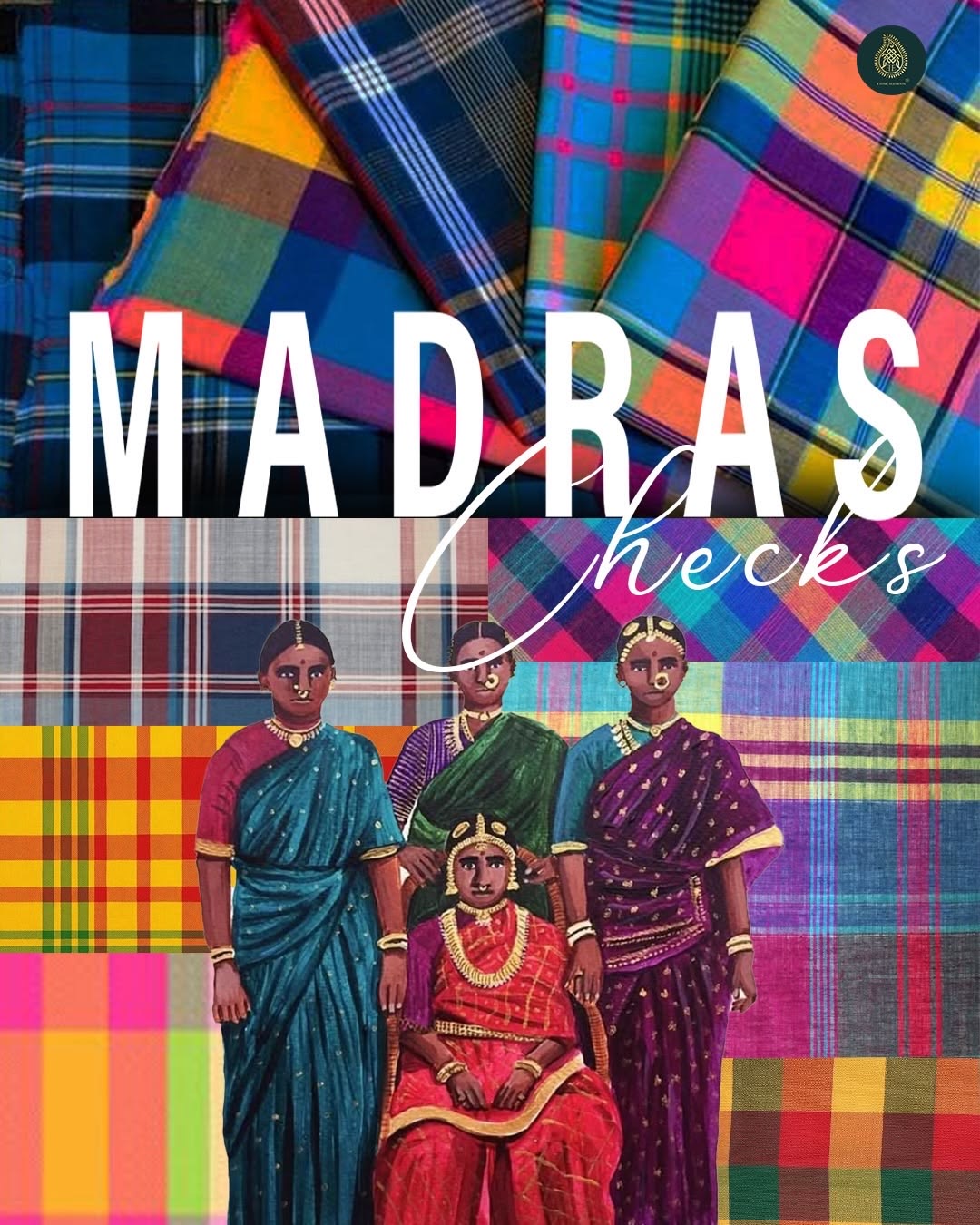
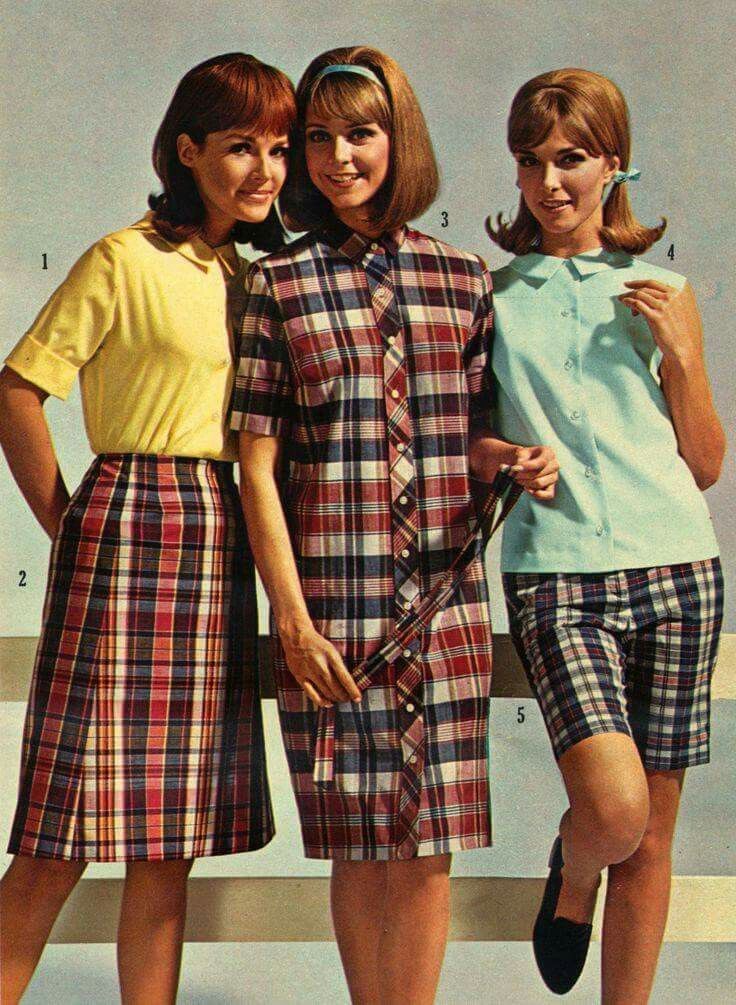
Popularized by Which Fashion Houses?
The roll call reads like a directory of American style itself: Brooks Brothers — the retailer at the center of the 1958 "bleeding" sensation.
Hathaway — for whom Ogilvy created the legendary 1961 campaign, "Hathaway discovers the India Madras print — very rare."
Ralph Lauren — who made Madras shorthand for aspirational East Coast summers.
J.Crew, Vineyard Vines, Tommy Hilfiger, Southern Tide — each embedding the check deeper into preppy DNA. And there is a delicious irony woven into its Ivy League link: Elihu Yale, the East India Company administrator at Fort St. George and primary benefactor of Yale College, shipped "unusual cotton fabrics that the Indian cottagers made" to be sold for the college's benefit. Dezyne Ecole College One 1961 Hathaway ad claimed the university was effectively founded on "three trunks of India Madras." The truth is contested — but the mythology only deepens the fabric's legend.
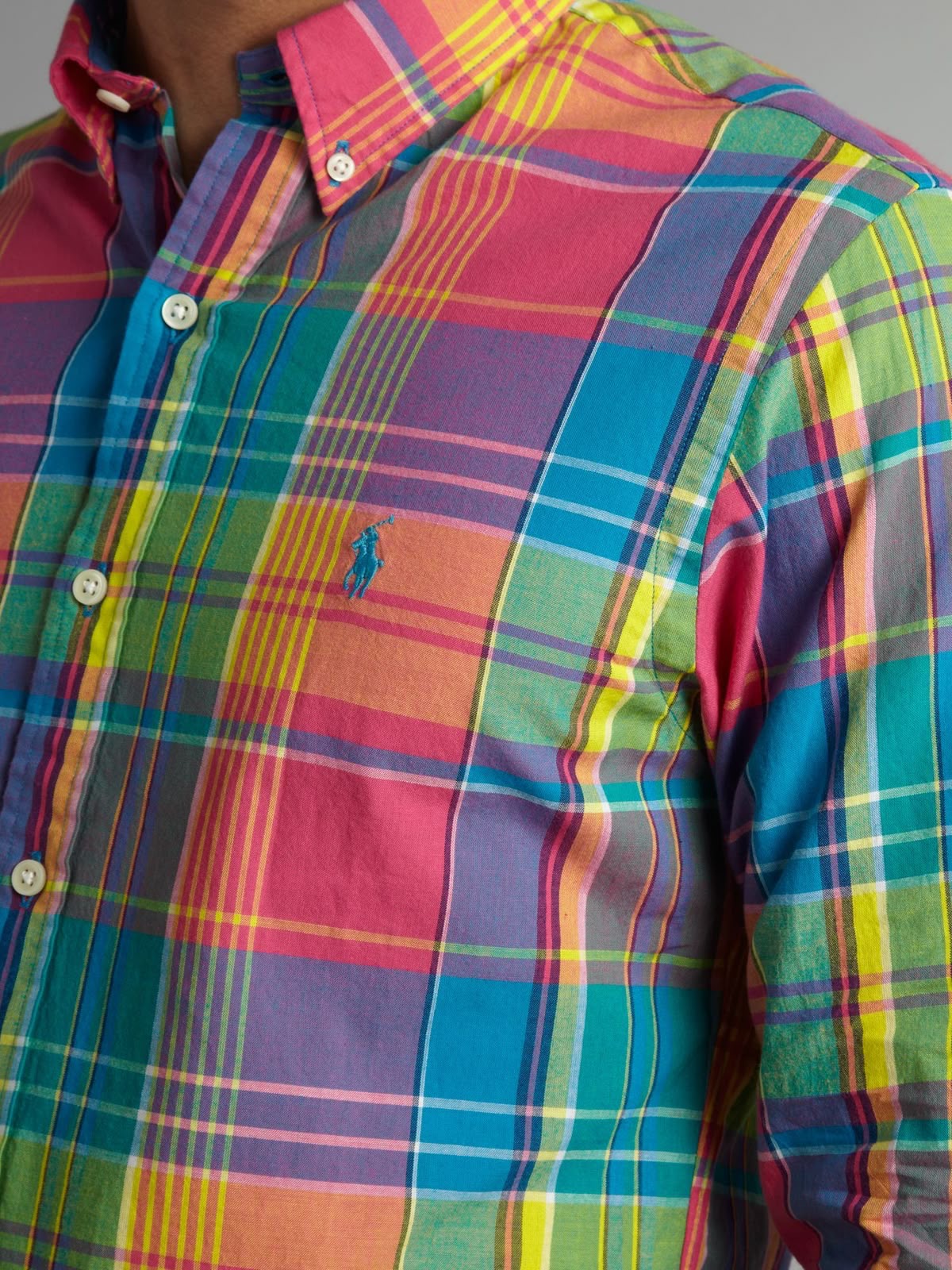
How Fashion Adopted It — The Great Madras Makeover
The transformation is, frankly, cultural alchemy. On India's Coromandel Coast, Madras was everyday clothing for laborers. In America, it became summer sophistication — the visual language of wealth at leisure.
The adoption of Madras was not one event. It was a three-stage relay.Stage One — The Rugby Tourists (mid-1930s). Ivy League teams from Yale and Princeton sailed to Bermuda for "College Week" — and, as Sports Illustrated recalled in 1956, thronged local stores buying "madras Bermuda shorts and blazers" at devalued-pound prices. The students carried the fabric home in their suitcases and their aesthetics.
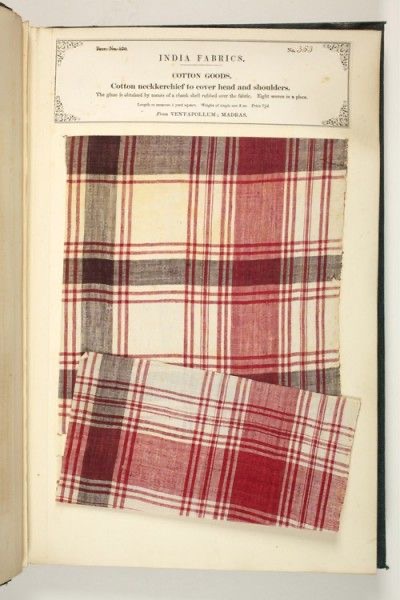
Stage Two — The Campus (1950s–60s). Madras blazers walked the quads of Milton Academy, Harvard, and Yale. Madras became associated with education, leisure, and inherited ease — the three pillars of the Ivy League brand.Stage Three — The Brand Machine (1960s–2000s).Brooks Brothers. Hathaway. Ralph Lauren. J.Crew. Vineyard Vines. Tommy Hilfiger. Southern Tide. Shirts, shorts, blazers, sundresses, ties, watchbands, golf apparel.
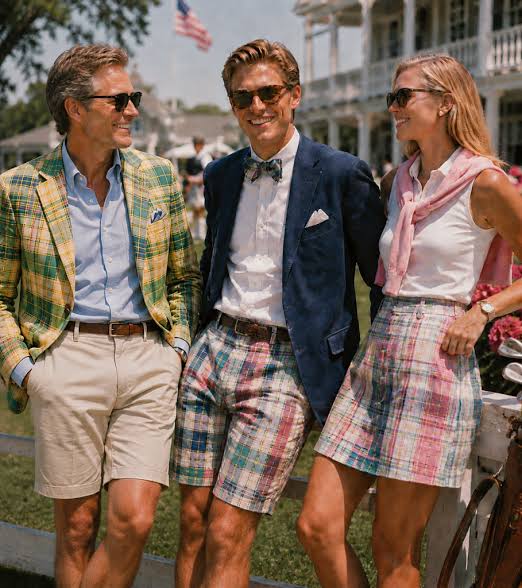
The result is fashion's great paradox — a fabric that is simultaneously elite and casual, luxurious and relaxed. Today, even "quiet luxury" hasn't killed Madras. It has merely muted it. The fabric adapts. It always has.
The Emotional Adoption: Crucially, fashion didn't just use Madras — it re-narrated it. Imperfection became authenticity. Fading became personality. Breathability became luxury. A working-class Indian textile was reinterpreted as elite American ease — while remaining, in its DNA, unmistakably Indian.
Why is the authentic Madras check industry in danger?
Now the part that should concern everyone who loves Indian textiles. The authentic Madras check industry is in danger. The handloom traditions that once allowed 10 colors on the weft are vanishing. Costs in Chennai have risen while cheaper labor markets absorbed orders. When a handloom weaving shed closes, we don't lose a factory — we lose a library of technique that took centuries to write. In 2008, I founded Dezyne École College on a simple conviction: that India's design heritage deserves institutions that defend it. Articles like this one are part of that defence.
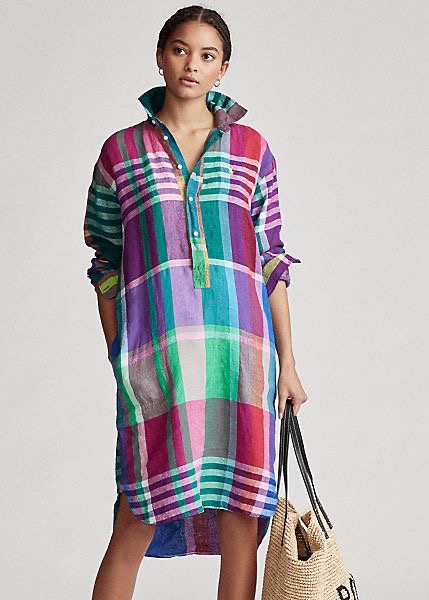
India Remains the World's Master of Checks
Here is what I find most profound.India possesses a 3,000-year-old textile tradition — the Ajanta and Ellora cave paintings depict sophisticated apparel millennia before Europe industrialized weaving. Checked fabrics flourished specifically in South India, in Chennai and the 300-kilometer radius around it, because the lungi and the handkerchief demanded them. In that naming — Madras — a city lent its identity to a global icon. The world can imitate the check. It can print the pattern, dye the yarns, even counterfeit the "bleed."
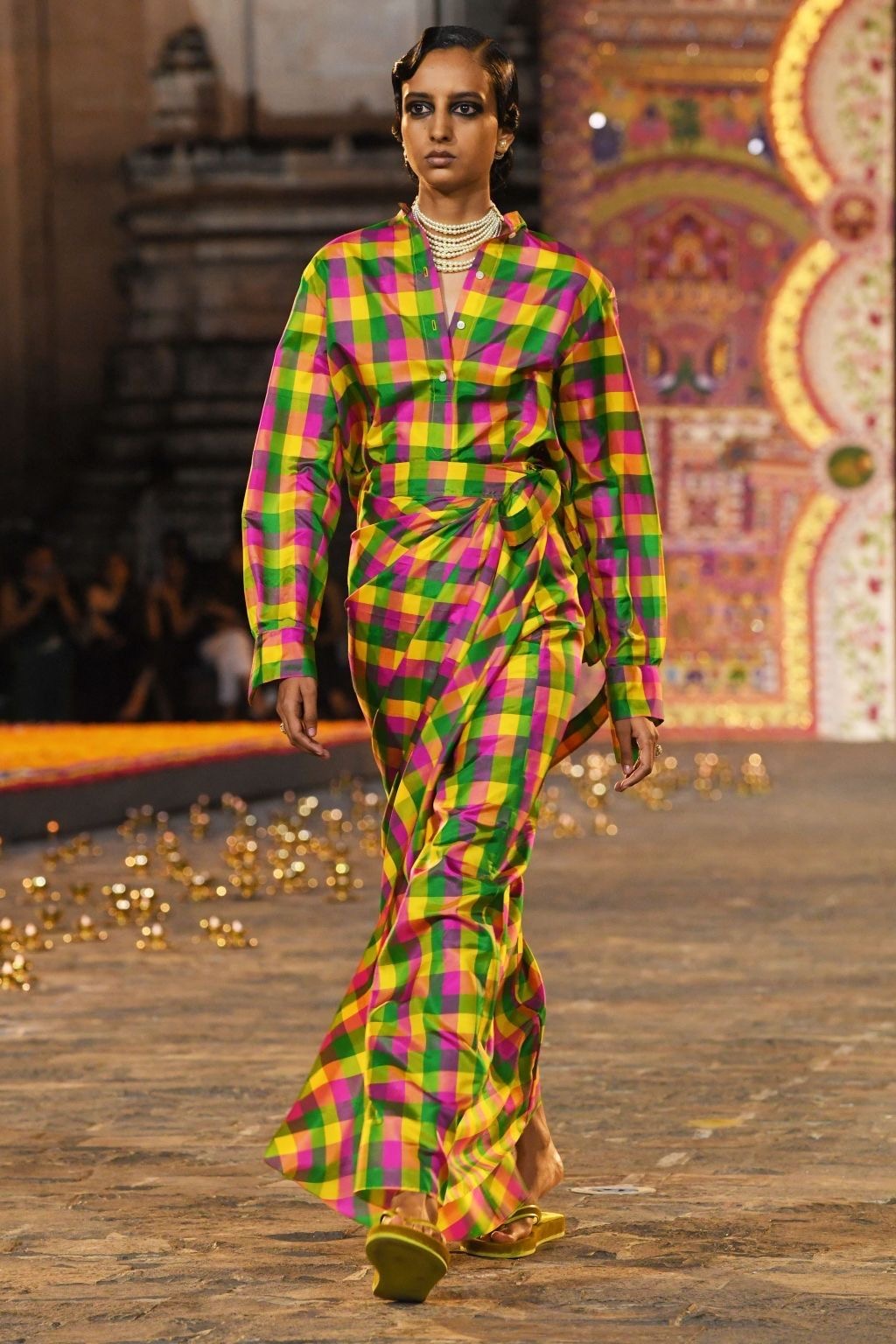
From Indian cotton. From Indian weavers. From Indian humidity. Sometimes the most ordinary things carry the most extraordinary journeys. We just don't notice them until they leave home
Let me end where the fabric began.
Put authentic handloom Madras beside any imitation, from any country, at any price. The imitation may copy the pattern. It may even copy the colors. But it cannot copy the optical depth of yarn-dyed intersections. It cannot copy the living patina of vegetable dyes that mellow with every wash. It cannot copy the loom intelligence that turns geometry into art.
The world has been printing checks for two centuries.
India has been weaving them for eight hundred. That is the difference between a pattern and a tradition.
One day you're watching fishermen in checked lungis on the Chennai coast. Years later, you're seeing remarkably similar checks on tailored blazers outside yacht clubs and summer weddings. And then you stop and think: that stylish preppy plaid everyone romanticizes? That came from India. From Indian cotton. From Indian weavers. From Indian humidity. Sometimes the most ordinary things carry the most extraordinary journeys. We just don't notice them until they leave home.
So the next time you see that preppy plaid — on a blazer outside a Newport yacht club, in a Ralph Lauren summer window — trace it backward. Past Ogilvy. Past the Bermuda tourists. Past the Company's ships. Past the Caribbean headwraps of defiance. Past the colonial bans and the trade winds.
All the way back to a humid weaving shed on the Coromandel Coast, where a fisherman wrapped a checked cotton square around his waist to survive the heat — and, without knowing it, created a design language the world is still speaking eight centuries later.
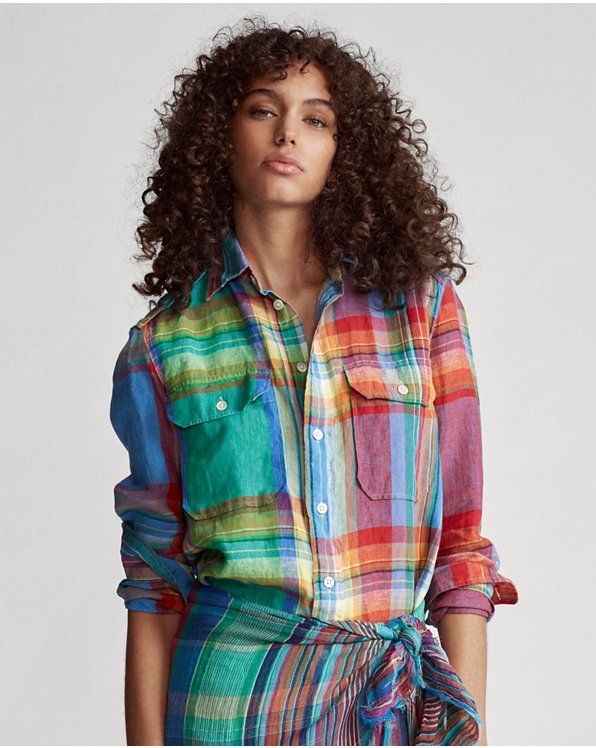
All the way back to a humid weaving shed on the Coromandel Coast, where a fisherman wrapped a checked cotton square around his waist to survive the heat — and, without knowing it, created a design language the world is still speaking eight centuries later.
The most extraordinary journeys never announce themselves.
They simply bleed — beautifully — into everything they touch
Frequently Asked Questions (FAQ)
Q1. What is Madras check fabric and where did it originate?
Madras check is a lightweight, yarn-dyed cotton plaid fabric that originated in Chennai (formerly Madras), Tamil Nadu, South India. It dates back over 800 years and was originally woven as checked squares worn as lungis by fishermen and paddy farmers to stay cool in tropical heat. The city of Madras lent its name to the fabric, which is why it is known worldwide as "Madras check."
Q2. What is "bleeding Madras" and why is it famous?
"Bleeding Madras" refers to authentic Madras fabric dyed with natural vegetable dyes — indigo, turmeric, and laterite reds — that are not fully colorfast. With every wash, the colors soften, migrate, and blend into each other, creating a unique vintage patina. In 1958, this "flaw" nearly caused a corporate disaster in America until advertising legend David Ogilvy turned it into the famous slogan "Guaranteed to Bleed" — transforming the defect into the fabric's greatest selling point.
Q3. Which fashion brands made Madras check famous?
Brooks Brothers was the first major American retailer to sell Madras fabric, followed by the Hathaway shirt brand, whose 1961 "Hathaway discovers the India Madras print" campaign was created by David Ogilvy. Later, Ralph Lauren, J.Crew, Vineyard Vines, Tommy Hilfiger, and Southern Tide embedded Madras check into American preppy and Ivy League style.
Q4. How is authentic Madras check different from printed checks?
Authentic Madras is yarn-dyed, not printed — the cotton threads are dyed before weaving, so when colored warps cross colored wefts, the hues optically blend at the intersections, creating a depth no printing process can replicate. Handloom Madras could carry up to 10 colors on the weft; machine-made versions manage only 4. It is also traditionally woven from fine 60-count cotton yarn, making it exceptionally lightweight and breathable.
Q5. Is Madras check fabric still made in India?
Yes — authentic Madras check is still woven in and around Chennai, in the approximately 300-kilometer radius of the city, where South India's checked-fabric tradition is concentrated. However, the handloom industry faces serious challenges from rising production costs, power shortages, and competition from lower-cost manufacturing countries, making government support and heritage preservation critical.
Q6. How should you wash and care for bleeding Madras fabric?
Wash bleeding Madras separately or with like colors in cold water, using a mild detergent. Never bleach, and avoid hot water or high-powered machine cycles, which accelerate color migration. With each gentle wash, the fabric develops a softer, more vintage character — which is exactly the look it is treasured for. Iron on medium heat while slightly damp for the best finish.
By Dr. Vinita Mathur
Founder President & Principal, Dezyne École College (est. 2008), Ajmer
This article is part of Dezyne École College's ongoing series on India's textile heritage — written to document, celebrate, and preserve the crafts that built India's design identity.
Dr. Vinita Mathur is the Founder President & Principal of Dezyne École College, Ajmer — a government-recognized institution she established in 2008 to bridge classroom learning with real-world design, management, and technology education. Under her leadership, Dezyne École has grown into a beacon of creative education where India's crafts are taught not as nostalgia, but as the foundation of a global future.